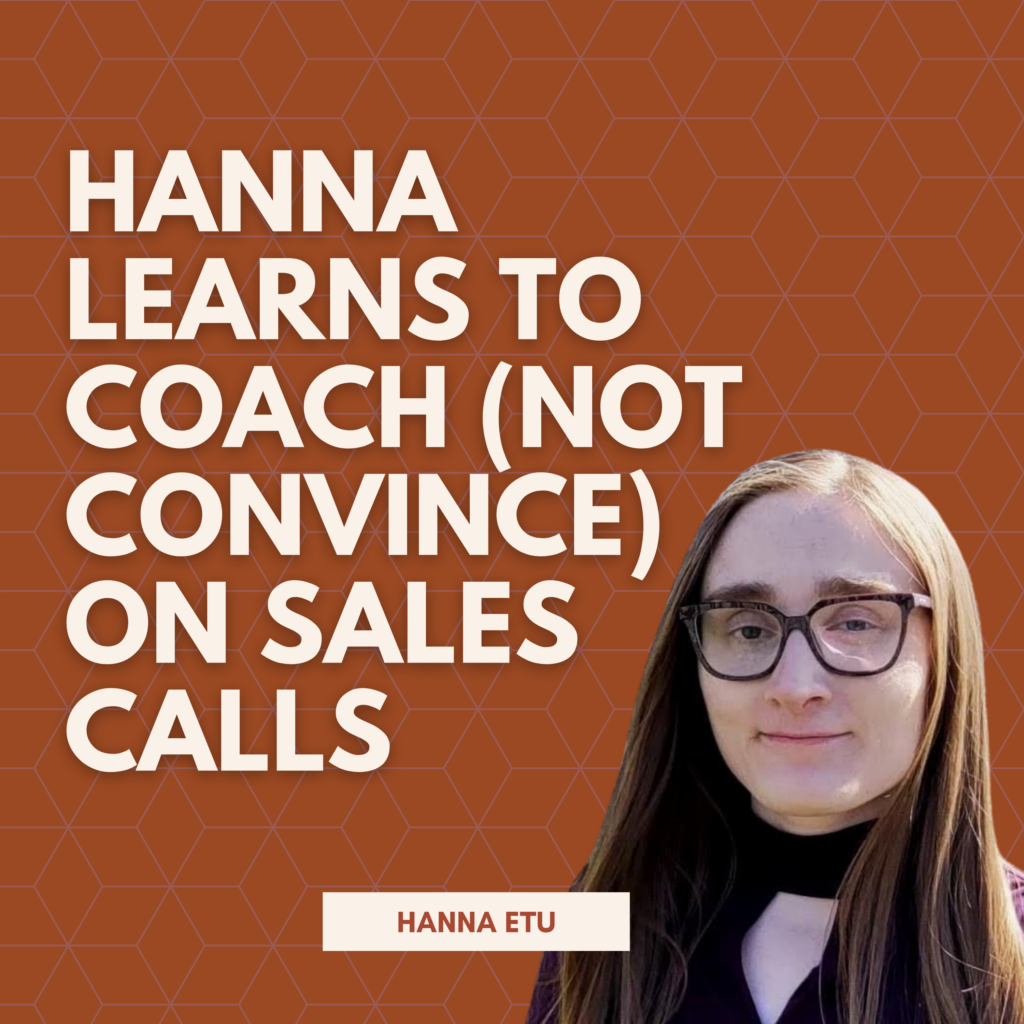
#226 : Hanna Learns to Coach (Not Convince) on Sales Calls
with Hanna Etu 

Episode at a Glance

Hanna Etu posts on Facebook and Instagram five days a week and sends regular emails, but her client roster is still stuck on empty.

Hanna helps writers with mental health differences establish a regular writing practice so they can finish their memoirs without losing the heart of their story. Lately, she’s frustrated by an email list that hovers below 40 subscribers, social content that feels more nurturing than effective, and sales calls that end with “let me think about it.”

She came looking for a clear strategy to attract the right writers, convert inquiries to clients, and scale her list beyond the crickets.

So, Hanna and I dissected her entire client attraction process. We addressed the real reason her audience never clicks “book a call,” how to shift her offers from generic to unmistakably hers, and where her sales conversations were going off the rails (plus the moment to pivot to coaching, not convincing). By the end, Hanna walked away with a funnel plan, a simple social media challenge, and the permission to trust her best coaching instincts on every sales call.

Let me highlight what Hanna and I worked through in this conversation.

Listen for the way I narrate the “commercial break” transition (when Hanna’s nurture content becomes a real invitation), and notice her immediate reaction when I reframe free coaching on sales calls as the most client-centered move.

Key Takeaways

Sell in Every Single Email: Consistent calls to action in social posts and newsletters show up as client care, not pushiness. Since nurture content alone doesn’t motivate action, making an offer every time is key for memoir coach client attraction.

Focus on Outcomes, Not Process: What clients buy is the chance to finish their memoir, not developmental edit packages or deadlines. Clear outcome messaging is more compelling than a list of features.

Coach Directly on Sales Calls: Address the client’s self-belief, usually their real obstacle, by coaching for clarity, not just reciting package details or pivoting away from their doubts.

Bundle to Build Your List: Hosting a bundle with targeted collaborators gets warm subscribers onto your list fast. Even a “mini-bundle” can 10x your audience without relying on traditional lead magnets.

Treat Your Newsletter as a Lead Magnet: Weekly, personal emails, presented as a true subscription, are more engaging and specific for your niche than yet another downloadable PDF.

Timestamps & Key Topics

[00:00] Dallas introduces Hanna and her coaching focus with memoir writers

[02:43] Hanna describes her struggles with client attraction and her current marketing efforts

[04:10] Dallas asks for details on Hanna’s social posting and email process

[05:25] They identify nurture content as the current pitfall and discuss selling frequency

[08:08] Dallas reframes selling as client care and shares her own email habits

[10:21] Hanna recognizes her offers need to reflect her true niche

[12:02] They discuss selling outcomes versus selling packages

[14:09] Dallas gives a commercial break analogy for CTAs inside nurture content

[17:55] Dallas challenges Hanna to a 30-day sell-in-every-post experiment

[19:15] Hanna details her struggles with sales calls and the new intake process

[22:17] Hanna shares concern about addressing client self-doubt on calls

[25:32] Dallas demonstrates how to coach, not convince, on a call

[27:03] They walk through coaching as the central part of the sales process

[33:36] Dallas explains how to present “chocolate or vanilla” offers focused on client outcomes

[37:31] Dallas redirects the focus to top-of-funnel growth with a bundle strategy

[41:40] They discuss effective lead magnets for Hanna’s unique audience
Connect 

Hanna Etu
Hanna Etu

CONNECT WITH GUEST

Dallas Travers
Dallas Travers
CONNECT WITH DALLAS

Helpful? Check Out These Related Episodes

Join the Pod Squad

A Free Inner Circle, Intimate Access Community for Coaches on a Mission

Coming In Hot To Your Inbox Every Week...

  • Transcripts for every single episode
  • Checklists to easily put what you hear into concrete action
  • Behind the Scenes videos from Hive Coaching Calls
  • Uplighting and insightful tips from Dallas to keep you on track and rooted. 

Episode Highlights

Build a Client Attraction System That Actually Works

My guest Hanna Etu supports writers with mental health differences as they establish a regular writing practice and finally finish their memoirs—without losing the heart of their story.

Hanna came to our session wanting real answers around client attraction and retention. Even with consistent social media and a weekly newsletter, she was struggling to grow her list, reach the right people, and convert leads into paying clients. We took a look at every layer of her process, from lead magnets and nurture content to messaging, sales calls, and the offers themselves.

Inside The Hive, I’ve noticed this theme with a lot of second-act coaches: message tweaks and more social content only get you so far. So in this episode, we rolled up our sleeves and focused on where the real gaps were: clearer sales invitations, selling the outcome (not the package), increasing the volume of leads, and coaching confidently during the sales call itself.

Let me highlight the steps Hanna and I worked through to build a system that attracts more of the right clients, fills her roster, and feels aligned from top to bottom.

Step One: Sell the Outcome, Not the Process

It’s easy to over-explain everything included in your offer like the number of sessions, pages reviewed, edit schedules, but that’s not what your clients are really buying. They’re looking for an outcome. For Hanna, that means supporting writers to actually finish their memoirs. When you center your sales messaging on the result, you give prospective clients a clear reason to hire you (rather than getting bogged down in technicalities they may not even understand).

Remind yourself: the specific logistics of how you deliver the coaching matter less in your marketing. Details can come later, once a client decides they’re ready to work with you.

Step Two: Move From Nurturing to Inviting

Many coaches fall into the nurture trap: posting helpful content week after week and hoping that, if you give enough away, people will eventually reach out. The reality is, nurture alone doesn’t pay your bills or theirs. You must include a direct invitation in every single piece of content.

That doesn’t mean becoming aggressive or salesy. It can be as simple as a line at the end (or even a commercial break in the middle) of your email or post, letting folks know exactly how to take the next step with you. If you’re genuinely here to help, make it easy for people to raise their hand and say yes.

Step Three: Use Your Coaching Skills on Sales Calls

Sales calls shouldn’t feel like a battleground or a place to prove your worth. Instead, treat them as a coaching session with intentions and boundaries set up front. When clients voice concerns (especially self-doubt), coach them through it rather than breezing past or validating and redirecting. Let them experience your real support and problem-solving live.

Set the agenda, narrate the process, and coach generously, but protect your time by naming the container. This helps your prospective clients get traction and clarity, while you build trust and confidence as the expert they need.

Step Four: Double Down on List Growth With Collaborative Bundles

With less than 40 people on her list, the math simply wasn’t working for Hanna. Regular content is great, but you can’t nurture people you haven’t met! The most efficient way for her to grow was by hosting a collaborative bundle, essentially a lead magnet swap with other experts whose audiences overlap hers.

A successful bundle doesn’t just bring in writers; it pulls in prospects from adjacent spaces like mental health, creativity, productivity, or social justice. She’ll start small, with the goal of running two bundles a year, so list-building becomes an ongoing system rather than a one-off project.

Finally: Treat Your Weekly Newsletter Like a Premium Lead Magnet

Cranking out PDFs or Canva checklists isn’t always the answer for this audience. Instead, make your weekly newsletter the core “lead magnet”. Something people genuinely want to receive for its insights, encouragement, and practical tools. Frame your newsletter as a can’t-miss subscription, not just bonus content. That way, every new subscriber comes in primed to engage with your best thinking right from the start.

And here’s a nugget you don’t want to miss: If adding a direct sales pitch feels awkward with your audience, narrate the interruption. Literally tell your audience, “Here’s a quick commercial break: if you need support, go here,” then jump right back into your message. This transparency not only normalizes selling, it helps your people know exactly what to do when they’re ready for more.

We also got into exactly how to structure Hanna’s offers when someone’s not even sure they want to write a book, how to approach pricing with compassion, and why coaching on a sales call often feels more ethical than trying to “overcome objections.” Curious what that looks like in action? Listen to the full episode for the specifics.