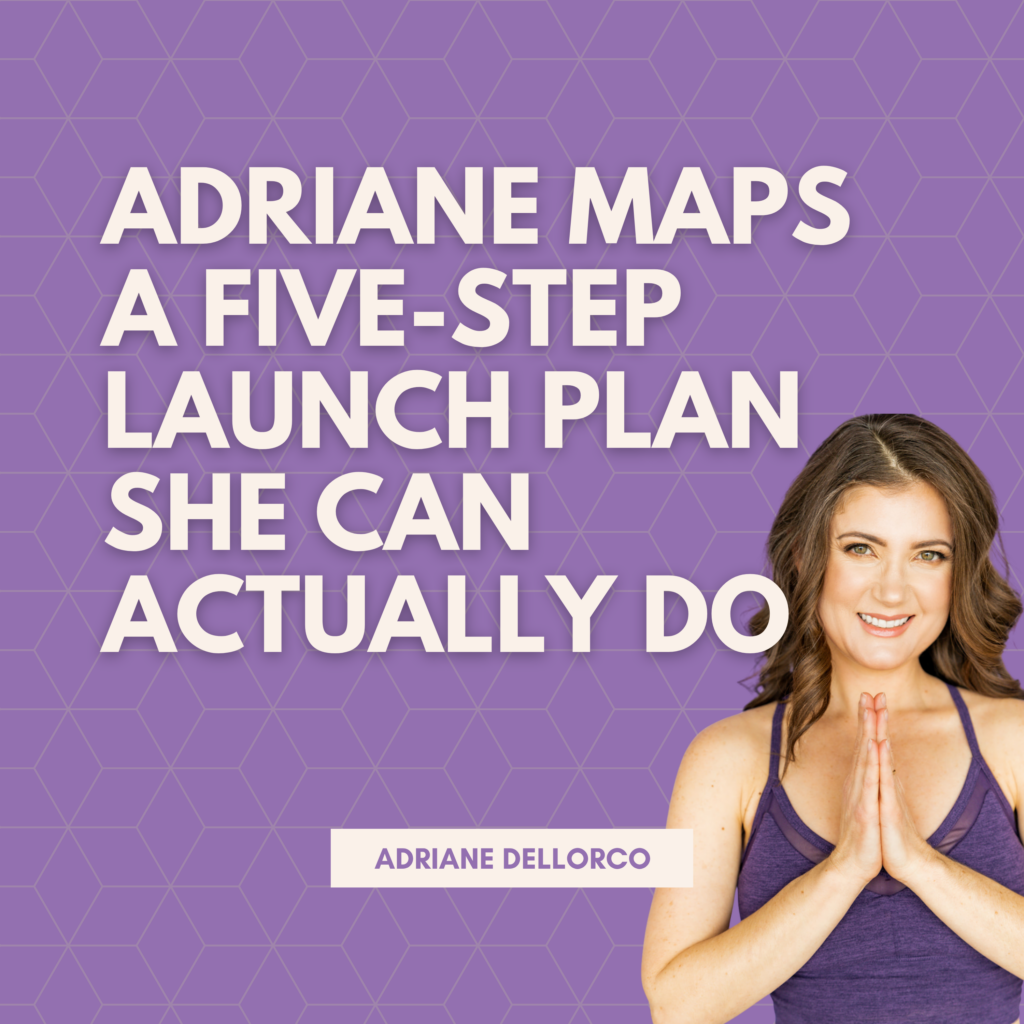
#227 : Adriane Maps a Five-Step Launch Plan She Can Actually Do
with Adriane Dellorco 

Episode at a Glance

Adriane Dellorco has noticed her proven client attraction tactics suddenly stop working, but she’s not sure if the culprit is trust issues, messaging, or the migraine market itself.

Adriane helps women with chronic migraine reclaim their lives using a whole person approach that blends yoga, pain reprocessing therapy, and lifestyle adjustments. She lives with migraine herself and brings both lived experience and expertise as one of the world’s leading voices in yoga for migraine. Adriane joined Dallas for coaching to figure out why her sales and connection rates have dropped sharply, and what needs to shift in her model.

Adriane came in wanting a clearer path to rebuild trust and convert new leads, even as organic engagement and show-up rates for her online programs have faltered. Together, we picked apart the psychological and financial barriers specific to chronic migraine sufferers, and mapped out a strategy to rebuild conversions. The heart of this session: trust lost to burn-out, medical letdowns, and fatigue is not the same as “bad messaging.” Adriane walked away with a plan to shift her language, test paid resource ads, and lean into authority via partnerships and podcast outreach.

Let me highlight what Adriane and I worked through in this conversation.

Watch for Adriane’s resistance when I suggest dropping the word “easy” from her marketing, and keep your ears open for the surprising reason a Facebook group might be costing her better clients.

Key Takeaways

Sell a Paid Resource to Qualify Leads: Shifting from free Facebook group ads to offering a low-cost migraine toolkit up front can quickly filter for buyers and attract clients truly ready for coaching.

Ditch the Word “Easy” in Messaging: Describing relief strategies as “easy” feels dismissive to chronic migraine sufferers and can erode trust, even when the intentions are good.

Pattern Interrupt to Build Trust: Leading with honesty by saying outright “I can’t cure your migraines”, which creates safety and stands out in a saturated marketplace of overblown promises.

Reduce Client Commitment to Lower Barriers: Reframing offers from a year to 8 weeks, plus optional add-ons, makes coaching containers feel manageable for clients who can’t trust their own capacity day-to-day.

Leverage Organization Partnerships for List Growth: Partnering with trusted migraine and women’s health organizations to co-host live events or challenges can create instant trust and deeper engagement than solo organic outreach.

Timestamps & Key Topics

[00:00] Adriane shares her background and coaching focus for chronic migraine sufferers

[02:11] Identifying a drop in conversions and engagement despite steady lead flow

[04:10] Dallas clarifies the trust gap between client, coach, and program

[07:48] Pinpointing where conversions are breaking down and what’s changed in Adriane’s funnel

[09:08] Debating pandemic market effects and the so-called ‘trust recession’ in online coaching

[13:08] Dallas introduces the pattern interrupt messaging angle

[16:23] Swapping from free group to paid resource ads to shift the quality of leads

[19:05] Rethinking a broad biopsychosocial approach versus leading with clear “yoga for migraine” positioning

[24:06] Mapping what really builds trust with a skeptical, fatigued audience

[29:15] Redesigning Adriane’s main program to lower time and commitment stakes for clients

[32:17] Dallas urges dropping the word “easy” from sales copy and explains why

[36:24] Adriane explores podcast guesting and relationship marketing with migraine organizations

[43:33] Outlining a September launch plan, including a live event for warm-up and leveraging partnership
Connect 

Adriane Dellorco
Adriane Dellorco

CONNECT WITH GUEST

Dallas Travers
Dallas Travers
CONNECT WITH DALLAS

Helpful? Check Out These Related Episodes

Join the Pod Squad

A Free Inner Circle, Intimate Access Community for Coaches on a Mission

Coming In Hot To Your Inbox Every Week...

  • Transcripts for every single episode
  • Checklists to easily put what you hear into concrete action
  • Behind the Scenes videos from Hive Coaching Calls
  • Uplighting and insightful tips from Dallas to keep you on track and rooted. 

Episode Highlights

Build Trust With Your Audience and Energize Client Conversion

My guest Adriane Dellorco helps women with chronic migraine take back their lives using a whole-person approach that combines physical, emotional, and lifestyle support. She brings lived experience herself, so her work is refreshingly real, empathetic, and client-centered.

Adriane came to our session feeling the effects of a shift in the online coaching world. Despite steady lead generation and growth in her social channels and email list, she noticed that conversion had gotten significantly harder this year. Fewer women were joining her programs, and even free resources weren’t driving the engagement she’d seen in previous years.

Inside The Hive, Adriane had already tapped into her community for voice-of-customer insights and started testing new messaging. But the challenge at hand was how to bridge the “trust gap” with her audience, many of whom have tried everything, are tired of empty promises, and question whether they have the energy for “one more thing.”

Together, we tackled how to address both trust in the solution and clients’ trust in their own capacity, while redesigning her client attraction journey to bring in buyers who are more ready to invest in meaningful change.

Let me highlight the specific insights and action steps Adriane and I uncovered to help her increase her conversions without feeling disconnected from her values or her audience.

Step One: Name and Address the Real Trust Gaps

We surfaced two big layers of trust Adriane’s audience wrestles with. First is trust in the solution itself. Many clients have already tested countless methods, making any new program feel like another risk. They’re skeptical, and rightfully so. Second, there’s trust in their own capacity, actually believing they have the bandwidth to participate, stick with a program, and experience results without getting overwhelmed.

We agreed that Adriane’s messaging needs to meet people where they are by acknowledging this directly. Instead of glossing over those doubts, call out the elephant in the room, which builds rapport right from the first interaction.

Step Two: Use Pattern Interrupt Messaging to Stand Out

Typical promises of “dramatic results” or “migraine cures” just don’t land for folks living with chronic illness. So, we strategized a pattern-interrupt approach in Adriane’s marketing. What does this look like? Try a headline such as, “This won’t cure your migraines, but it can help you feel a little better every day.”

This kind of direct, even counterintuitive, honesty lets your audience breathe a sigh of relief. It signals, “I get you,” instead of “Let me sell you another miracle.” The goal isn’t to “inspire hope” in abstract terms but to ground your offer in everyday wins.

Step Three: Attract Buyers, Not Just Browsers, With Paid Entry Points

Adriane was running ads to a free Facebook group, which built her list, but the leads weren’t sticking. I suggested running ads to a low-ticket resource instead like a $7 or $29 migraine toolkit. Even if fewer people buy, those who do are more invested from day one. That small transaction shifts the dynamic from browsing for relief to actively seeking solutions.

Plus, once someone’s made one small purchase, they’re far more likely to invest in a core program down the line. It’s about building real momentum, not just collecting freebie seekers.

Step Four: Adjust Your Offers and Language for Capacity and Trust

We discussed reducing the perceived commitment of Adriane’s mentoring program. Shortening her offer from a year-long commitment to an eight-week core with optional ongoing support made the leap feel more manageable. This simple reframing addresses the “capacity trust” issue and helps potential clients picture themselves completing the program.

Just as critical, I urged Adriane to remove the word “easy” from all of her messaging. For people living with migraines, nothing about getting better is “easy,” and even well-meaning encouragement can feel dismissive. Instead, focus on “manageable,” “simple,” or “supportive” and narrate that you’ll show up for them on both good and bad days.

Finally: Leverage Relationships for Warmer Leads and Stronger Trust

We circled back to relationship marketing as a growth lever. Adriane’s best clients used to come through migraine organizations. We designed a pitch for her to partner with these orgs to co-host five-day events or workshops for their communities. This leverages existing trust and brings in highly qualified leads, people who already see Adriane as an expert endorsed by names they trust.

One more thing worth noting: to make sales calls less intimidating for people who don’t feel well, try switching to asynchronous conversations with a tool like VideoAsk. This allows clients to connect with you on their own time, fitting conversations into their good days, not forcing everyone onto a scheduled call.

There’s more to our session, especially around program structure and rolling out a multi-touch launch plan. If you want to know how to organize your next challenge or what language Adriane will use for her new offer, tune in to the full episode to grab all the details.