
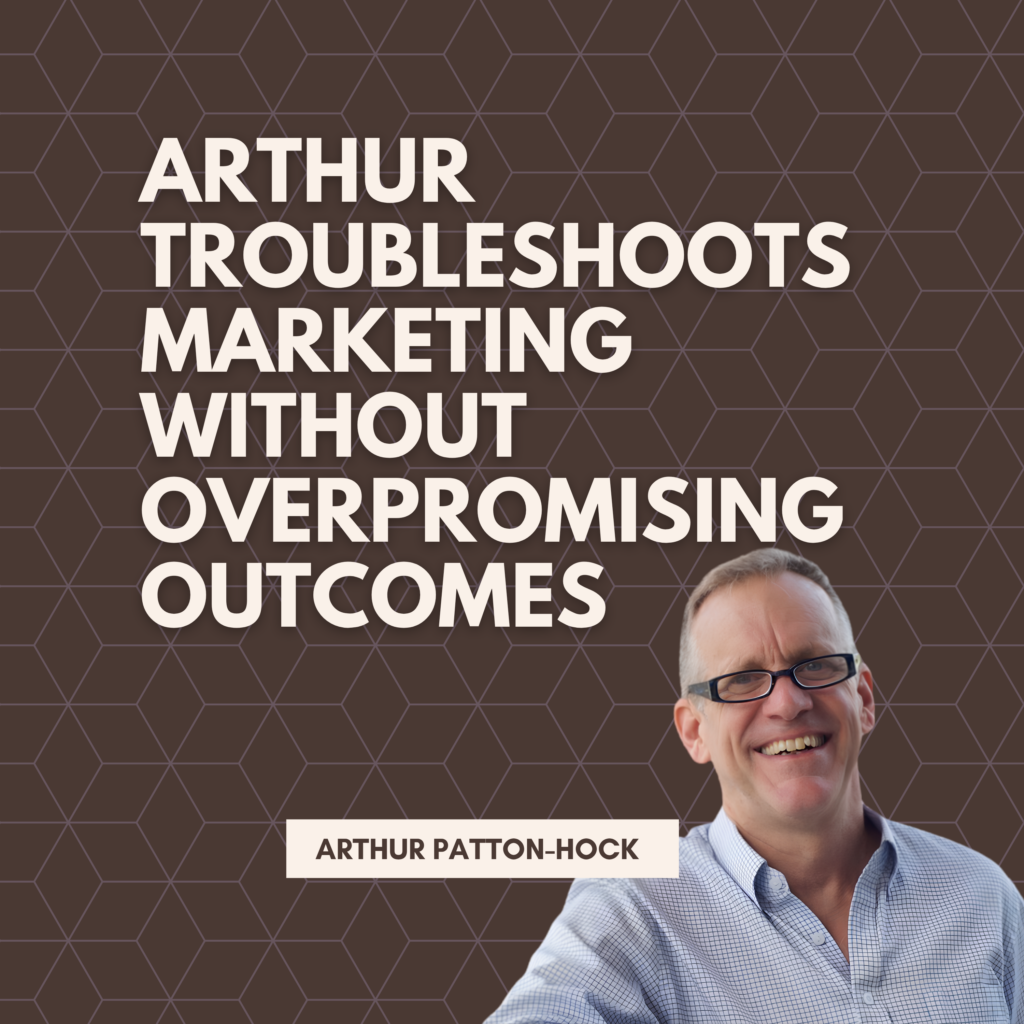
#235 : Arthur Troubleshoots Marketing Without Overpromising Outcomes
with Arthur Patton-Hock 

Episode at a Glance

Navigating how to sell coaching when your clients want external results but what you actually deliver is deep inner work is Arthur’s biggest marketing challenge.

Arthur Patton-Hock helps pre- and postdoctoral historians and humanist scholars create opportunities in and outside of academia. He came to this session wrestling with the gap between what his clients think they want (concrete job outcomes) and what truly makes the difference (how they relate to themselves and their materials).

Arthur wondered how to talk about the tangible, “resume-building” side of coaching without overpromising or minimizing the critical mindset shifts his clients need. We walked through a real-world framework for rewriting your coaching offers and marketing so they appeal to results-driven clients—and still keep you honest. Arthur left with a litmus test for marketing that does both.

Let me highlight what Arthur and I worked through in this conversation.

We ran into a wall when Arthur described how scholars obsess over landing a job, but then panic if you talk about “inner steadiness.” Watch for how we built a messaging checklist that fits both mindsets, and track what happened when Arthur realized he was already offering practical outcomes, he just wasn’t naming them out loud.

Key Takeaways

  • Sell the Concrete Outcome (Honestly): Naming the tangible actions you do with clients (like reviewing CVs or mapping a networking plan) matters, but using language like “designed to” sets accurate expectations and keeps you in integrity as a coach.
  • Make Inner Work Tangible: Connect the dots between mindset shifts and practical benefits. When you name how confidence and self-trust impact job applications, you turn an abstract promise into something clients will pay for.
  • Use a Marketing Litmus Test: Every sales page, email, or post gets checked for three elements: a case for inner work, a clear tangible action, and a realistic intended outcome. This keeps your messaging honest and magnetic.
  • Narrate Your Limits (and Why): Clients appreciate when you clearly state what you can’t promise up front. This transparency builds trust and sets you apart from competitors making wild guarantees.
  • Tailor Your Content Formula: You can co-create content with AI, but always review it for specificity and add your story. A checklist helps you remember to translate mindset hacks into practical tips scholars actually value.

Timestamps & Key Topics

[00:00] Arthur outlines his work with historians and humanists
[03:10] Arthur describes his two-track approach: tactics and strategy (mindset)
[05:12] Dallas reframes why selling inner work is so hard
[08:34] Naming promises vs. outcomes in a coaching offer
[11:17] Dallas’s example from coaching actors with non-guaranteed outcomes
[13:24] They analyze how to state the “goal” without overpromising
[15:22] Arthur and Dallas outline the three-part messaging litmus test
[18:07] Arthur discusses discomfort giving direct advice and accountability
[20:04] Dallas shares tactical language for describing coaching benefits
[22:17] Arthur tries his LinkedIn post using the new framework
[24:10] They add tangible steps to mindset-focused content
[25:55] Dallas assigns an action item: run all welcome emails through the checklist
[27:14] Arthur recognizes he’s more concrete than he thought
[30:11] Building prompts for AI-written content that cover all points
[32:11] Arthur tests his new “what I do” statement out loud
[35:38] They check the dream client power statement against the checklist
[37:19] Arthur commits to updating his welcome email sequence and content formula
[39:08] Dallas explains how “narration” filters out the wrong-fit clients

Get Arthur’s weekly newsletter, “The Inner CV,” at arthurpattonhock.com.
Connect 

Arthur Patton-Hock
Arthur Patton-Hock

CONNECT WITH GUEST

Dallas Travers
Dallas Travers
CONNECT WITH DALLAS

Helpful? Check Out These Related Episodes

Join the Pod Squad

A Free Inner Circle, Intimate Access Community for Coaches on a Mission

Coming In Hot To Your Inbox Every Week...

  • Transcripts for every single episode
  • Checklists to easily put what you hear into concrete action
  • Behind the Scenes videos from Hive Coaching Calls
  • Uplighting and insightful tips from Dallas to keep you on track and rooted. 

Episode Highlights

Sell the Inner Work Without Overpromising Results

My guest <a href=”https://www.arthurpattonhock.com/”>Arthur Patton-Hock</a> helps pre- and postdoctoral historians and humanist scholars create opportunities both inside and outside academia.

Arthur came with a nuanced challenge. He wanted to figure out how to sell coaching that focuses on the real driver of change, inner work, without falling into the trap of making promises he can’t keep, like guaranteeing a coveted postdoc or assistant professorship.

Together, we wrestled with how to market coaching that’s about so much more than action steps or job market tactics. Arthur needed a way to communicate the tangible value of inner work, show his expertise in actionable strategy, and be transparent that there are no guaranteed results, all while staying true to his integrity.

We worked through direct messaging, practical frameworks for articulating benefits, and how to narrate the value of intangible results. The conversation touched everything from Arthur’s email welcome series to the real emotions scholars carry as they build career traction in tough markets.

Let me highlight the steps Arthur and I used to shape language and strategy that connect with the right-fit clients, those who value both action and self-inquiry.

Step One: Draw a Sharp Line Around What You Can and Cannot Promise

Your marketing can feel honest and clear when you openly state what’s possible and what isn’t. Instead of hiding disclaimers in small print, call out the reality front and center. For example, make it clear that while you can’t guarantee a job at the end of your program, you can promise momentum, increased self-trust, and a new relationship to uncertainty.

Building this kind of transparency into your messaging actually builds trust. People appreciate when you treat them as adults who can handle nuance. This way, the right clients opt in because they want growth, not empty promises.

Step Two: Make the Tangible Benefits of Inner Work Explicit

Resist the temptation to sell only the external stuff. Instead, describe how inner shifts lead to more visible, measurable changes. In Arthur’s world, this looks like talking about how mindset work enables his clients to keep showing up for applications or to stop letting a single rejection throw them into a spiral.

Be specific about the everyday outcomes: less dread when opening feedback emails, greater resilience when networking, and the ability to stop agonizing over every CV revision. Paint a picture so potential clients can see and feel what changes in their career and day-to-day confidence.

Step Three: Use “Designed To” and Other Intention-Driven Language

You can describe your process and goals in a way that’s both concrete and honest. Instead of saying, “This plan will get you a job,” say, “This approach is designed to increase your visibility and put you on more shortlists.” This subtle shift shows your expertise and process without overpromising.

Have a running list of phrases that keep you grounded, like “The goal here is…” or “This method is intended to…” That way, you regularly connect the action steps to deeper intentions, which helps your audience understand the value of your offer.

Step Four: Develop a Litmus Test for All Client-Facing Content

Before sending an email or posting to LinkedIn, check your content against a simple standard. Ask yourself: Am I making the case for inner work? Have I described a tangible action or outcome? Do I clearly articulate intended results instead of promises? Is there a clear call to action?

This litmus test keeps you honest and consistent. It also helps you strike the right balance between mindset and strategy, so your messaging is both compelling and believable.

Finally: Let the Right Clients Self-Select by Narrating Your Approach

Articulate directly that you’re not the right fit for people who want quick fixes or aren’t interested in reframing their relationship with uncertainty. When you narrate the distinction between inner shifts and visible outcomes, you help readers self-select. You’ll attract clients who get it, and you’ll avoid wasting time on those who are looking for a magic bullet you can’t provide.

And here’s a nugget you don’t want to miss: The most honest (and effective) way to position intangible wins is by making them concrete in everyday language. For example, “You’ll revise your resume without falling into a panic,” is a lot more real than, “You’ll feel more empowered.” This kind of specificity lets people grasp how coaching changes their lived experience.

Arthur and I also touched on how to refresh an email welcome series to reflect these principles without feeling like you’re just talking about another resume “hack.” If you want to see how we brought all these pieces together or hear us laugh about the realities of working with ChatGPT, jump into the full episode for the complete conversation.